Sunday, June 30, 2024

Sunday, July 28, 2019
Curbing Cattle Heat Stress

The animal’s core temperature peaks approximately two hours after the environmental temperature peaks and takes four to six hours to lower back to normal temperature. With this in mind, forget handling cattle in the evening to reduce the risk of heat stress.
When processing cattle during high heat seasons, work cattle in smaller groups so they are not standing in the holding area much longer than 30 minutes.
Try to find and utilize facilities that are shaded with good air flow to help reduce the heat. A sprinkler system may assist in cooling the area, if the water droplet size is large. Never over-crowd
working facilities, work cattle slowly, and use low-stress handling techniques. Remember that processing cattle in any temperature elevates the animal’s core temperature.
Cattle movements should be short distances. Strategic planning on pen movements will reduce
unnecessary movements and potential heat stress. Moving heavier cattle closer to loading facilities
throughout the feeding period can be beneficial.
Keep in mind that compromised animals are at higher risk for heat stress. Those animals that are sick or lame are usually running higher temperatures than normal (average temperature for a beef animal is 101.5 degrees Fahrenheit), combined with hot temperature and high humidity raises their risk of heat stress. Take extra precautions with these animals to provide additional resources like shade and
cooling.
Sources: Nebraska Beef Quality Assurance; Rob Eirich, NE Extension Educator
Artwork: Cattle Heat Stress Tracker
Animal Husbandry and Livestock Books
Farm Supply
A Guide to Raising Beef Cattle
Wednesday, July 24, 2019
18 Well-Known Zoonoses
Dog diseases and their symptoms in humans include Leptospirosis which causes Weil's disease, Sarcoptic mange which leads to skin rash and bites, Ringworm which produces skin lesions and hair loss, Salmonellosis which produces diarrhea and vomiting, and Rabies which can lead to fever, itching at original bite area, behavior changes, paralysis and death.
Cat zoonoses include Cat Scratch Fever which leads to a high temperature and flu-like symptom, Ringworm and its familiar inflamed skin lesions, and Toxoplasmosis which can lead to the abortion of a fetus.
Zoonoses from other species include Brucellosis in cattle, Campylobacter from hamsters, Salmonellosis from mice and rats, Tetanus from horses.
Source: Animal Biology and Care by Sue Dallas.
Wednesday, July 17, 2019
Using Phytase to Help Pigs Digest Phosphorus

Most of the phosphorus in plant feed ingredients is bound in phytate, and it is difficult for pigs to utilize that phosphorus because they cannot hydrolyze the phytate molecule. An enzyme called phytase, however, helps pigs hydrolyze that phosphorus bond from phytate so digestibility is increased.
Testing the digestibility of phosphorus in conventional corn grain, corn germ, distillers dried grains with solubles (DDGS), and high-protein distillers dried grains (DDG). They tested each ingredient with no phytate and with 500 units, 1,000 units, and 1,500 units of added phytate. Supplementation with 500, 1,000, and 1,500 units of phytate increased phosphorus digestibility from 40.9 percent in corn grain with no added phytate to 67.5, 64.5, and 74.9 percent, respectively.
Phosphorus digestibility in corn germ increased from 40.7 percent to 59.0, 64.4, and 63.2 percent, respectively. Digestibility of phosphorus in DDGS increased from 76.9 percent to 82.9, 82.5, and 83.0 percent, respectively, but the increase was not significant. Phosphorus digestibility in high protein DDG increased from 77.1 percent to 88.0, 84.1, and 86.9 percent, respectively.
For corn and corn germ, pigs had a low digestibility without phytase, but as phytase was added to the diet digestibility increased dramatically.
For DDGS and high-protein DDG, the result was quite different. Because these two ingredients have been fermented, some of those phytate bonds are hydrolyzed in the ethanol plant and therefore, less of the phosphorus is bound to phytate in DDGS and high-protein DDG.
When phytase was added to DDGS, there was not a significant increase in digestibility because the digestibility was already very high; the same was true for HP DDG.
The efficacy of phytase appears to depend on the particular ingredient. If it's an ingredient that has a lot of phosphorus bound to phytate, there's a positive response; if it doesn't have much phosphorus bound to phytate, there's not nearly as much response.
This research will help producers and feed companies to increase the digestibility of phosphorus in ingredients they are already feeding, thus avoiding the expense of adding dicalcium phosphate or monocalcium phosphate to swine diets.
Sources: Journal of Animal Science; ACES News
Artwork: Pig in a Stall
Tuesday, May 7, 2019
Summer Grooming

"Never clip a dog's hair close to the skin in summer. His hair acts as an insulator against heat and protects him against insects. When you give him a crewcut, you're exposing him to sunburn, the bites of flies and others insect pests. Also, the short hairs will prick and itch him every time he moves."
~ How To Live With A Dog by J.J. McCoy. Berkeley, 1966.
Originally published as "The Complete Book of Dog Training and Care."
Saturday, March 2, 2019
Swine Probiotics Improve Weight Gain, Reduce Manure

Pig producers supplementing livestock feed with dried distillers grains with solubles (DDGS) and other coproducts generated from biofuel production have found the hard-to-digest fiber increases the production of manure.

The pigs were also given bacterial supplements the scientists developed from different strains of Bacteroides ovatus, which had been obtained from human fecal samples and cultured in fiber-rich media.
Pigs that received the bacterial supplements reduced their manure output by 20 percent. These pigs also gained more weight and had improved blood cholesterol and glucose levels, both indications of an improved energy status, compared to pigs not given probiotics.
The probiotic could improve pig performance and reduce manure volumes, which in turn would increase producer profits and reduce the environmental footprint of pork production. Probiotics can be fed in a liquid supplement or possibly freeze-dried and mixed with feed.
Sources: Journal of Animal Science; Agricultural Research
Artwork: Image Number K9441-1
Probiotics and Prebiotics for Pigs
Animal Husbandry and Livestock Books
Farm Supply
Feed & Hay
Monday, February 25, 2019
Keeping Cats Indoors

Vaccinations don't protect against all the diseases of concern in outdoor cats, but they are just as likely to succumb to dogs, coyotes, cars, and parasites as they are to die from disease.
The idea that "keeping cats indoors stifles their nature" is not true. Indoor environments can be complex enough to provide the stimulation cats need with elements like cat trees, catnip sources, and toys.
As for the birds, feral and outdoor cats are responsible for hundreds of millions of birds kills every year in the United States, according to the American Bird Conservancy. Where populations are already dealing with wild predators, the devastation on the birds is often lessened because the birds may have natural defenses to protect themselves. Nevertheless, cats are a major predator that is often harmful to any bird population.
Many people think that placing a bell around the cat's neck will cause birds to disperse. The sound of a bell, however, does not trigger an alarm response in birds and often birds do not respond.
Source: Dr. Kenneth Welle, University of Illinois College of Veterinary Medicine
Artwork: Cat and Prey
Pet Supplies
Cat Furniture
Pet Toys
Catnip and Cat Grass
Monday, May 21, 2018
Broody Breeds
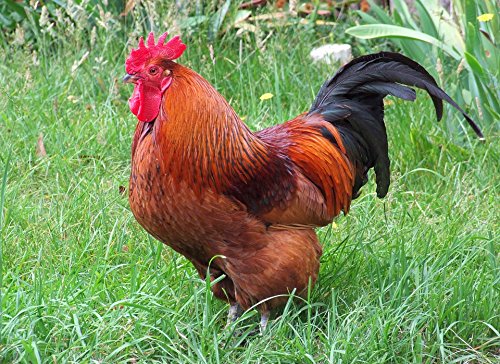 |
| Rhode Island Red |
Because hens stop laying eggs when they are brooding, breeders have selected hens that don't get broody. Broodiness is a behavioral trait that doesn't appear in the show ring, so unless breeders want it, they may select against it.
Bantams are more likely to be broody than large fowl. It's a traditional trait that allows flocks to replenish themselves, so heritage breeds should be good broody hens. Heritage breeds that brood well include Ameraucana, Aseel, Barnevelder, Brahma, Buckeye, Chantecler, Cochin, Cornish, Cubalaya, Delaware, Dominique, Dorking, Dutch, Faverolle, Hollad, Japanese, Java, Jersey Giant, Kraienkoppe, Marans, Nankins, New Hampshire, Old English Games, Orloff, Orpington, Polish, Plymouth Rock, Rhode Island Red, Silkies, Sussex, Welsummer, and Wyandotte.
All games are usually good brooders. Madagascar Games, also called Malgache, are reported to be willing to adopt chicks from other broods and of different ages. Males also sometimes adopt chicks.
adapted from
Chicken Breeds for Your Home Flock
by Christine Heinrichs
Artwork: Rhode Island Red
Hen and the Art of Chicken Maintenance
Living With Chickens
Thursday, January 11, 2018
Frost Seeding

Frost seeding involves broadcasting a grass or legume seed over a pasture and letting the natural freeze/thaw cycles of late winter and early spring move the seed into good contact with the soil.
The best time to frost seed is usually from mid-February to the end of March.
Continued in... Frost Seeding
Home Grown
Farm Supply
Growth Spurts
Artwork: Spring Seeding
Saturday, October 21, 2017
Farm and Garden Picks: Storey's Illustrated Breed Guide to Sheep, Goats, Cattle and Pigs

Storey’s Illustrated Breed Guide to Sheep, Goats, Cattle, and Pigs features full-color profiles of 163 livestock breeds. Whether you’re looking for a gentle domestic backyard animal or are hoping to introduce a rare heritage breed on your farm, you’re sure to find an animal that’s perfect for your needs.
If you need solid, up-to-date information on common domestic animals or you are hoping to introduce a rare heritage breed to your farm, this definitive guide has the information you need on the animals that interest you.
Storey's Illustrated Breed Guide to Sheep, Goats, Cattle and Pigs
163 Breeds from Common to Rare
by Carol Ekarius
Storey Publishing, 2008
Animal Husbandry Books
list your book on Buy Direct Directory
Monday, July 31, 2017
Farm Direct: Raising Meat Goats

In addition, importation of new breeds has stimulated a breeding industry which needs herds to produce purebred breeding stock as well as animals for exhibition.
The commercial goat meat industry is almost entirely ethnic, (Muslim, Hispanic). It is affected by the dates of various religious holidays shown below plus others. The dates for most holidays change from year to year. Islamic holidays change by 11 days each year.
Continued on the Tip Sheet: Raising Meat Goats
Farm Direct
Chevon
Artwork: Boer Goat
Saturday, July 29, 2017
Controlling Varroa Mites in Bee Colonies

"There is no chemical or management procedure that will completely eradicate this pest, so individual treatment regimes must be developed," writes James E. Tew in The Beekeeper’s Problem Solver. "One method is drone brood trapping. Drones require approximately 23 days to mature, while workers require just shy of 21 days. Apparently due to the longer development time, Varroa mites preferentially seek out developing drones. You can therefore use drone combs to attract mites away from other areas of the brood nest."
Once the comb is filled and the drone brood is mostly capped, it should be removed and placed in a freezer. Both drones and mites will be killed, and the comb can be reused.
During warm months, Tew suggests performing this eradication procedure about every 18–20 days.
Artwork: Beehive Kit
Animal Husbandry and Livestock Books
The Beekeeper's Problem Solver
Friday, February 17, 2017
The Right Place for Your Apiary

"A commonly overlooked factor is the scenic setting," notes The Beekeeper's Problem Solver. "Most modern beekeepers keep bees for enjoyment and fulfillment rather than monetary gain. A scenic, placid apiary with gentle, natural sounds offers a quiet break..."
Artwork: Honey Beehives
Animal Husbandry and Livestock Books
The Beekeeper's Problem Solver
Monday, January 23, 2017
Farm and Garden Picks: The Beekeeper's Problem Solver

100 Common Problems Explored and Explained
by James E. Tew
Quarry Books, 2015
Outrider Reading Group
Animal Husbandry Books
Homegrown Honey Bees
Friday, January 13, 2017
Farm and Garden Picks: The Backyard Field Guide to Chickens

This is a guide for backyard chicken keepers in search of chickens that best fit their needs.
Each breed of chicken listed in the field guide is thoroughly described and is illustrated by color photos. The book tells you all about the bird, detailing each breed's particular usefulness, adaptation to climate, coloration, number of eggs typically laid, foraging ability, temperament, and unique qualities.
The Backyard Field Guide to Chickens
Chicken Breeds for Your Home Flock
by Christine Heinrichs
Voyageur Press, 2016
Outrider Reading Group
Animal Husbandry Books
The Book Stall
Tuesday, May 10, 2016
Cattle Temperament Linked to Feedlot Performance

Cattle classified as temperamental appear to be less susceptible to lung damage and related respiratory diseases and have decreased yield grades, but at the same time may produce lighter weight carcasses with decreased quality grade.
Researchers used 2,800 cattle at a commercial feedlot to determine cattle temperament solely by exit velocity upon arrival to identify the impact temperament had on feedlot performance. Infrared sensors were attached to the processing chute and alleyway and used to time how fast cattle exited the processing chute. Once exit velocity was determined, within each pen the fastest 20 percent were classified as temperamental and the remained deemed non-temperamental.
Exit velocity was used as a measurement of temperament because it is the only objective and practical measurement of temperament that can be applied in a commercial setting. Scientists sought to evaluate the impact of temperament on animal health and carcass merit with an eye toward using the data as a sorting tool within feedlots.
After scientists determined exit velocity, the cattle were maintained in their original pens, not sorted based upon temperament, and finished. At the end of the finishing period, the research team followed the cattle to the packer and evaluated lung damage, liver abscesses and collected all the variables for carcass data.
One of the major findings of the trial was the difference in lung damage associated with respiratory disease. The results suggest that the non-temperamental cattle had more observable damage to the lung, indicative of the animal being impacted by respiratory challenge, when compared to cattle classified as temperamental.
Research has suggested that temperamental cattle have an altered immune response and display limited clinical symptoms of illness and this altered immune response may be a more resilient immune response compared to non-temperamental.
The studies also found that cattle classified as temperamental had lighter carcass weight at harvest and decreased quality grades. More than 53 percent of the non-temperamental cattle received a quality grade of choice, compared to 49 percent of the temperamental animals.
The findings suggest that utilization of temperament may be a viable management tool for feedlots. It might provide for a unique management strategy that might increase returns on these temperamental animals. With the difference in lung damage in the temperamental cattle at the time of harvest, and previous research indicating limited clinical signs of illness in temperamental cattle, segregation may allow for some modifications to the processing procedures and management of these cattle to take advantage of this alterations.
Sources:
Ty Schmidt, Ph.D., assistant professor, animal science, University of Nebraska-Lincoln, 402-472-6772; Jeff Carroll and Jeff Daily of USDA-Agricultural Research Service; Justin Waggoner of Kansas State University.
Artwork: Cattle Feedlot
Animal Husbandry and Livestock Books
Farm Supply
Feed & Hay
Thursday, January 14, 2016
Managing Cattle in Cold Weather

Most cattle can easily handle cold weather conditions if they are dry and maintain dry hair coats, even if temperatures are sub-zero. The most adverse conditions occur around freezing (32 degrees) when cattle get wet and the pens turn sloppy and muddy. The presence of moisture or mud on the animal draws heat from the animal's body at a much faster rate than when the animal is drier in extreme cold temperatures.
The ideal wintertime temperatures for feedlot cattle are around 20 degrees. At these temperatures, the snowfall that does occur is normally drier and will blow off the animal. Feedlot surfaces also remain firm and allow cattle easier access to feed bunks.
Healthy, dry, well-conditioned and well-fed cattle can handle wind chills of 40 degrees Fahrenheit below zero, but tissue damage may start to occur when wind chills drop to around 60 degrees Fahrenheit below zero.
There are a number of things that can be done in feedyards and other cattle holding areas both before and after major weather events.
Smooth or knock down rough frozen pen surfaces with a blade or harrow. Sharp edges that form when cattle tracks freeze can cause bruising of the feet which can lead to foot injury. When pen surfaces are rough, cattle don't make their way to feed or water often enough which can cause decreased performance.
Bedding such as wheat straw, corn cobs, or corn stalks can be used to help insulate cattle from the cold ground during severe cold outbreaks. These are better for bedding than hay-like materials because they are less palatable. Cattle will be less likely to eat the bedding and more likely to stay on the ration provided in the bunks. In feed yards, apply bedding after feeding to minimize bedding consumption.
Accumulation of snow in the pens can cause cattle bunching or piling on, which can lead to increased death losses. When heavy snowfall or drifting snow occurs, remove the snow from the pens before the next storm arrives.
It is important to keep feedlot animals from going off feed during even the worst of weather conditions. Erratic feed intake can result in digestive problems and loss of performance, possibly even death in severe cases. Cattle that are within 30 to 45 days of slaughter are particularly prone to go off feed and can be difficult to get back on feed. Moving cattle to a higher roughage, storm ration may be advisable.
Sources:
Terry Mader, beef cattle specialist, University of Nebraska-Lincoln
Artwork: Cattle in Winter, 1862
Animal Husbandry and Livestock Books
The Corral
The Illustrated Guide to Cows
Thursday, October 29, 2015
Beekeeping In The City

While legalization of urban beekeeping may be trending positively, Homegrown Honey Bees author Alethea Morrison cautions beginning beekeepers to check with local authorities before setting up a hive. "Many municipalities regulate beekeeping or prohibit it outright. Find out what the rules are where you live, ideally from your local bee association."
Talk to your neighbors before setting up a hive, Morrison suggests. She blames much of the public's fear of bees on yellowjackets, or wasps, which have similar coloring and are considerably more aggressive. Educating them on the differences can help make urban beekeeping less frightening.
An Absolute Beginner's Guide to Beekeeping
by Alethea Morrison
Storey Publishing, 2013
Artwork: Yellowjacket Eating a Bee
Here's How To... Control Yellow Jackets
Homegrown Honey Bees
Animal Husbandry and Livestock Books
Wednesday, October 28, 2015
Calming Separation Anxiety

"Dogs who panic will sometimes eliminate in the house while you are gone, even if you just put the dog outside. Some will tear holes in the couch or chew a favorite item such as a shoe. Some dogs are more silent sufferers and may pant and pace while the owner is gone. Punishing any unwanted behaviors can increase the anxiety the dogs has, making a separation anxiety event all the more likely the next time."
While specialized training may be needed for some dogs, Swager suggests that the confidence building techniques outlined in her book will help most dogs feel better about being left home alone. Owners should try to keep their arrivals and departures low-key and try to desensitize their pet to cues that signal the separation.
A separate DVD, "Separation Anxiety-A Weekend Technique," teaches owners an "I'll Be Back" technique that alleviates their dogs' fear.
Tried-and-True Techniques to Help Your Dog Feel Secure
by Peggy O. Swager
Lyons Press, 2015
Artwork: Anticipation
Separation Anxiety-A Weekend Technique (DVD)
Pet Supplies
Dog Food
Sunday, October 25, 2015
Chocolate Poisons Pets

The trouble with chocolate is that it contains theobromine and caffeine, both methylated xanthine alkaloids. While not harmful in small amounts in humans, these chemical compounds can be deadly in dogs and cats. They stimulate the sympathetic - "fight or flight" - branch of the nervous system, causing release of a chemical called epinephrine (commonly known as adrenaline).
In small doses, adrenaline gives humans and animals extra energy to react in potentially harmful or emergency situations. But toxic doses of methylxanthines lead to the over-stimulation of this system.
A pet that ingests a harmful amount of methylxanthines may breathe rapidly and become very restless and overheated; its heart rate and blood pressure may increase drastically, possibly culminating in cardiac arrhythmias (abnormal heartbeat). The pet may also vomit, have diarrhea, and drink and urinate more than usual.
Ingesting chocolate could ultimately lead to seizures or even death without appropriate veterinary care.
The concentration of methylxanthines vary by the type of chocolate, ranging from the least in white chocolate up to the most in cocoa powder. Cocoa bean mulch, a commercial product for gardens, is especially harmful to pets.
The more chocolate a pet ingests, the more likely there will be significant symptoms. Also, the less a pet weighs, the more likely exposure will bring severe effects.
When a pet has ingested a toxic dose of chocolate, veterinarian will explore treatment options that include induced vomiting, treatment with activated charcoal to prevent intestines from absorbing the methylxanthines, or treatment with intravenous fluids and medication to prevent seizures.
Sources:
Dr. Sandra Yi, assistant professor of toxicology, University of Illinois College of Veterinary Medicine in Urbana, Illinois; 217/333-2907
Artwork: Theobromine Molecule
Pet Supplies
Dog Food
Cat Food
Subscribe to:
Posts (Atom)
